
Choosing Cuticle Nail Scissors for professional use in 2026 means looking beyond appearance. Small details matter: the meeting of the blades, the shape of the tips, and how securely the handles sit in the hand. During repeated appointments, a tool that feels balanced can make controlled work easier and reduce hand strain. Fit still varies from one professional to another.
This guide examines the features that deserve a closer look. It considers blade length, sharpness, steel quality, handle comfort, and whether the scissors suit precise trimming around the nail fold. It also covers practical care, including cleaning, drying, safe storage, and checking alignment before regular use. These habits support consistent performance, but they cannot compensate for poor technique or a damaged tool. Check manufacturer care instructions; finishes and construction can differ.
A polished product description is not proof of lasting quality. Compare specifications, inspect the hinge and tips where possible, and weigh reliable user feedback against marketing claims. No single pair suits every hand. That is easy to forget when a model looks perfect online. The recommendations ahead are intended to help salon professionals and experienced nail technicians make a more informed comparison, not promise that one choice fits every service or working style.
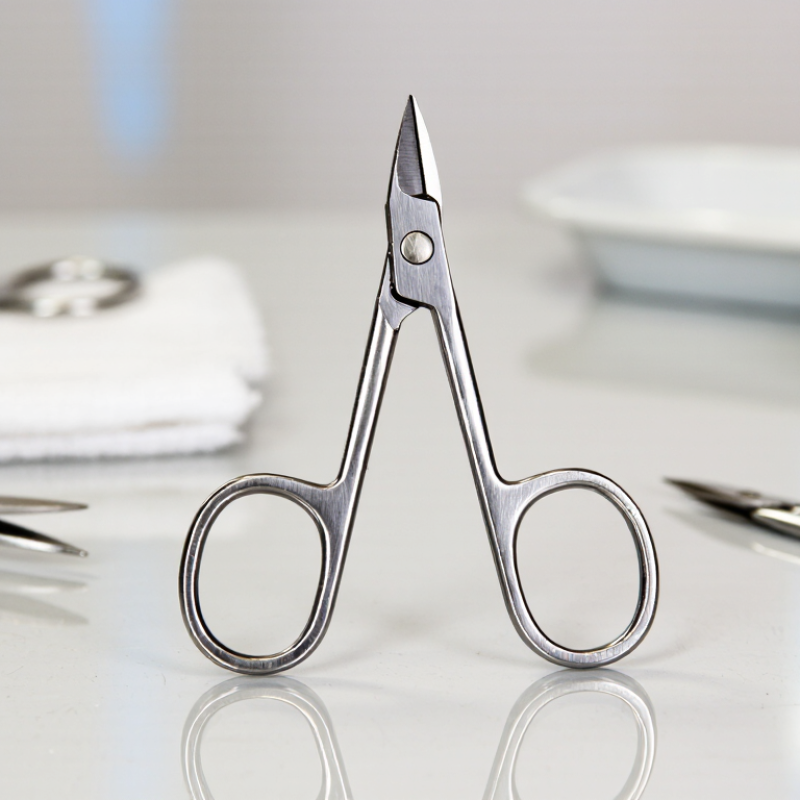
What Defines a Professional Cuticle Nail Scissor
A professional cuticle scissor should offer controlled, predictable trimming—not simply sharp blades. Look for fine, aligned tips, a smooth hinge, and balanced handles that stay comfortable during repeated work. Stainless steel can support cleaning and corrosion resistance, but material alone does not guarantee good performance. Grand View Research estimated the global nail care market at USD 23.41 billion in 2023. That figure describes market demand, not tool quality; careful selection still depends on construction and handling.
At the worktable, the blades should meet cleanly along their length, without catching thin paper or tugging loose cuticle. The tips need to reach small edges while remaining easy to control. Trim only loose, non-living cuticle; avoid cutting attached skin. CDC guidance emphasizes cleaning instruments before sterilization, so choose a tool whose hinge and blades can be thoroughly cleaned according to its care instructions. A precise scissor helps, but technique matters more. I still need to slow down when visibility is poor.
Tips: Check blade alignment under bright light. Open and close the scissor gently; feel for grit or uneven resistance. Keep it dry after cleaning, and replace it if the tips bend or stop meeting evenly.
| Selection Dimension | Professional-Use Characteristics | What to Check |
|---|---|---|
| Blade shape and length | Short, narrow blades with a fine point allow controlled trimming around the nail fold. Curved blades are commonly used to follow the contour of the nail area. | Check that the blade shape suits the service technique and provides a clear view of the cutting edge. |
| Cutting performance | Both edges should meet evenly and cut thin, loose cuticle tissue cleanly without requiring excessive force. | Inspect blade alignment and test on an appropriate disposable test material; do not use scissors to cut living skin. |
| Joint action | A smooth, stable pivot supports precise movement. The blades should open and close without grinding, looseness, or lateral play. | Move the handles through their full range and check for consistent resistance and secure alignment. |
| Material and corrosion resistance | Stainless steel is widely used for salon instruments because it resists corrosion better than ordinary carbon steel. Steel grade and finish affect durability and maintenance. | Confirm the material specification and follow the manufacturer’s care instructions; stainless steel is not immune to corrosion. |
| Sterilization compatibility | Reusable instruments used in professional settings need a cleaning and disinfection or sterilization process appropriate to local regulations and the instrument’s instructions. | Verify that the specific scissors are approved for the intended processing method. Do not assume every stainless-steel instrument is autoclavable. |
| Handle comfort and control | Balanced handles and appropriately sized finger rings help maintain control during detailed work and repeated use. | Hold the scissors in a working position and check that the rings, weight, and opening range suit the user’s hand. |
| Tip safety and precision | Fine tips support access to small areas but require careful handling. A protective cap or safe storage method can help protect the tips between services. | Check that the tips are intact, aligned, and stored securely; avoid using damaged or bent blades. |
| Maintenance and service life | Regular cleaning, thorough drying, correct lubrication when specified, and professional sharpening can help preserve performance. | Look for clear care guidance and inspect the cutting edges and pivot regularly for wear or damage. |
| Professional suitability | A suitable tool combines precise cutting, dependable alignment, comfortable handling, and care instructions compatible with the salon’s hygiene workflow. | Evaluate the complete instrument and its documented processing requirements rather than relying on appearance alone. |
Selection note: Product construction and approved reprocessing methods vary. Follow the instrument manufacturer’s instructions and applicable local infection-prevention requirements.
Look for aligned tips, a smooth hinge, and balanced handles. Sharpness alone is not enough.
Hold the tips under bright light and look for gaps or crossing. Open and close the blades gently. They should meet evenly.
Curved blades can follow rounded nail edges. Straight blades offer a clear view on flatter areas. Neither shape suits every hand or task.
Finger loops should not pinch, and the hinge should move smoothly. Try repeated movements, not just one quick squeeze. Short tests can mislead.
No. Stainless steel can resist corrosion during routine care, but finish, alignment, and construction still matter.
Trim only loose, non-living cuticle. Avoid attached skin, and use steady lighting. A fine point needs careful control.
Remove visible residue before processing. Confirm the tool suits your facility’s approved method, then follow its care instructions and workplace protocols.
Check for corrosion, loose movement, dullness, or bent tips after processing. Replace them if the blades no longer meet evenly. No tool stays perfect.
This guide explores what makes Cuticle Nail Scissors suitable for professional salon work, from carefully aligned blades and dependable steel to handle designs that support steady, controlled movement. It compares blade shapes and materials, explaining how their differences can affect accuracy, durability, and ease of care. Readers will also learn how to assess cutting precision, hand comfort, and whether a pair can withstand appropriate salon sterilization routines.
The 2026 selection highlights the qualities professionals may prioritize when choosing scissors, including consistent performance, a secure grip, and practical maintenance requirements. The final section offers guidance on matching a tool to individual working preferences and keeping it clean, dry, and properly cared for between uses. Together, these considerations help salon professionals make informed choices and maintain reliable tools for detailed cuticle work.