
Beauty & Surgical-Grade Instruments for Tomorrow · OEM & Private Label · Worldwide Export

Send Inquiry
0%

Choosing Cuticle Nippers for global buyers in 2026 requires more than comparing prices and polished product photos. Buyers must examine cutting performance, material quality, supplier reliability, and regional compliance expectations. A nipper may look excellent online yet feel stiff, misaligned, or uncomfortable during real use.

Small details matter. Check whether the jaws meet evenly without visible gaps. Confirm the stainless-steel grade, surface finish, spring durability, and handle balance. A clean, controlled cut depends on sharp edges and consistent assembly. Buyers should request samples before placing larger orders. Test them repeatedly with suitable training materials, then record edge performance, grip comfort, and cleaning compatibility. One sample is not enough.

Supplier evidence also deserves careful review. Ask for inspection records, material documentation, production photographs, and traceable batch information. Reliable manufacturers should explain quality-control steps without making vague promises. Packaging should protect the tips from impact, moisture, and accidental opening during international transportation. Regional product requirements can differ, so importers should verify current obligations with qualified local advisers.

There is no perfect tool. Even experienced buyers can overlook fatigue after repeated handling. That weakness should be part of the evaluation, not hidden. A practical sourcing decision balances precision, safety, service life, documentation, and total landed cost. This guide explores how to compare Cuticle Nippers with clearer evidence and fewer costly assumptions in the changing global market of 2026.
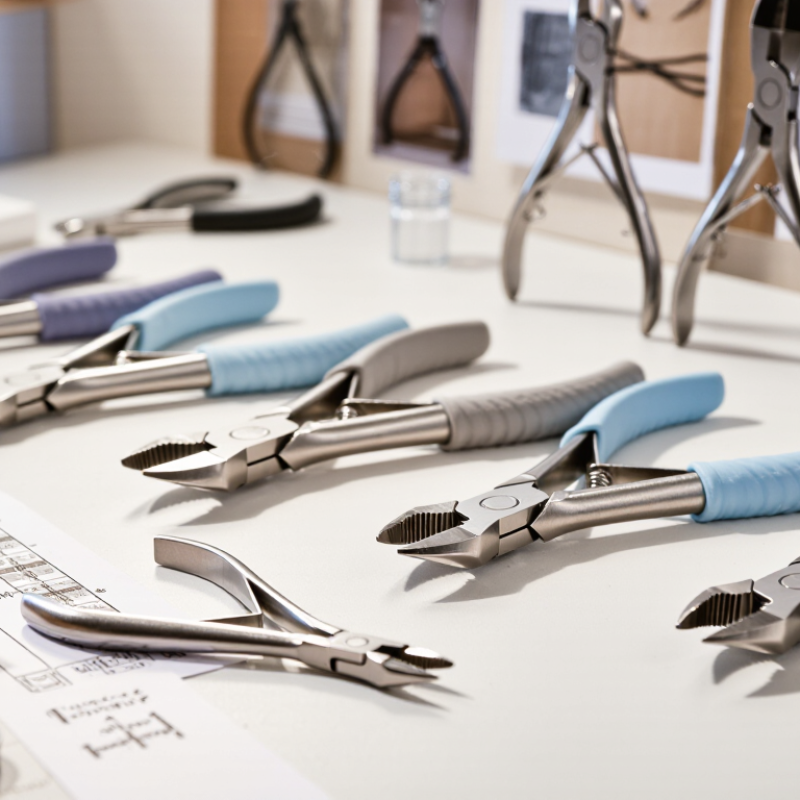
How to Choose Cuticle Nippers for Global Buyers in 2026?

Define the Main Types of Cuticle Nippers for Different User Needs

How to Choose Cuticle Nippers for Global Buyers in 2026?

Cuticle nippers are not one universal tool. Their jaw design, handle length, spring system, and steel quality suit different users. Standard nippers usually have medium jaws and balanced handles. They work well for home users and general salon maintenance. Slim, pointed jaws offer better access around narrow nail folds. They require steadier hands and more training. Small mistakes can remove healthy skin.

For frequent professional use, choose ergonomic nippers with a smooth return spring. A double-spring model can reduce hand fatigue during repeated services. Angled jaws improve visibility when working on curved nails. Heavy-duty nippers may suit thick cuticles, but excessive force can cause discomfort. That choice needs care. A shorter jaw often gives better control, although it may increase cutting time.

Grand View Research estimated the global nail care products market at about USD 23.4 billion in 2023, with continued growth projected through 2030. This broad category includes tools, so it does not measure nippers alone. Still, the figure signals stronger demand for specialized nail-care equipment. Buyers should also inspect joint smoothness, jaw alignment, corrosion resistance, and replaceable springs. ASTM material references can support purchasing checks, but they do not guarantee cutting performance. Test samples under real salon conditions. A polished finish can look excellent and still hide poor alignment.

Compare Blade Shapes, Sizes, and Cutting Precision

How to Choose Cuticle Nippers for Global Buyers in 2026?

The global nail care products market reached an estimated USD 23.41 billion in 2023, according to Grand View Research. Its projected 5.2% CAGR increases pressure on buyers to select consistent tools. Blade geometry matters more than polished packaging. Curved blades follow the cuticle line and suit detailed salon work. Straight blades offer a clearer cutting path for thicker, uneven edges. However, neither shape guarantees precision.

Choose a jaw size that matches the user’s technique. A 3–5 mm jaw supports controlled trimming around small nail plates. A 6–7 mm jaw removes more material but may feel aggressive near delicate skin. Test the closed blades against bright light. A narrow, even meeting line usually indicates better alignment. Check for side movement, rough edges, and spring resistance. Small defects become obvious after repeated use.

The 2024 Professional Beauty Tools Market analysis by Mordor Intelligence identifies durability and ergonomic design as key purchasing factors, although its categories combine several tool types. That limitation matters. Reported market growth does not prove every nipper performs well. I recommend testing samples across different hand sizes before placing a volume order. A comfortable handle, smooth return action, and clean single-cut response are practical evidence. Not perfection. Performance should be recorded under real working pressure, not judged only by appearance.

Evaluate Materials, Sharpness, and Rust Resistance

For global buyers in 2026, material selection should begin with traceable specifications, not polished photographs. A reliable nipper usually uses corrosion-resistant stainless steel, but “stainless” alone proves little. Ask for the exact steel grade, hardness range, and heat-treatment records. Higher hardness can preserve an edge, yet excessive hardness may make jaws brittle. Check the hinge, too. It should open smoothly without side-to-side play.

During sample inspections, I use a clean paper test and examine the cut line under magnification. The jaws should meet evenly from heel to tip. A small gap can cause pulling, discomfort, and uneven trimming.

Paper is only a screening method. Real performance needs controlled testing on suitable practice material.

Sharpness must remain consistent across production batches, not just on one approved sample. Request inspection records showing jaw alignment, edge finish, and closing force. A mirror finish looks professional, but it cannot replace accurate grinding.

I once accepted a bright sample that developed orange spots after humid storage. The issue was incomplete rinsing after polishing, not the advertised steel grade. That mistake changed our incoming inspection process.

For rust resistance, ask about passivation, cleaning, drying, and protective packaging. Test samples in warm, humid conditions, then inspect the hinge and inner jaw. Salt exposure may reveal weaknesses, but it should follow a defined method. Do not treat one short test as proof of lifetime durability.

Handle comfort also matters during repeated professional use. A sharp tool that causes fatigue may still fail its buyer. Keep supplier documents, batch photos, and test results together. They make quality claims easier to verify.

Check Ergonomics, Safety Features, and Maintenance Requirements

How to Choose Cuticle Nippers for Global Buyers in 2026?

Ergonomics should be checked before cutting performance. Choose handles that open smoothly without excessive thumb pressure. A rounded grip can reduce local pressure during repeated salon work. NIOSH identifies force, repetition, and awkward wrist posture as major ergonomic risk factors. Test the nippers for five minutes, not five seconds. Your hand may reveal problems first. I have found that a light tool is not always comfortable. Poor balance can make the wrist work harder.

Safety features need practical verification. Look for controlled jaw alignment, a stable spring, and a protective cap for transport. The cutting edges should close evenly, without crushing or pulling the cuticle. Avoid tools with sharp external corners. The WHO Global Report on Infection Prevention and Control (2022) reports that healthcare-associated infections affect up to 7 in 100 acute-care patients in high-income countries, and up to 15 in 100 in low- and middle-income countries. Manicure tools are not hospital instruments, but this data reinforces careful cleaning and handling. Skin breaks deserve respect.

Maintenance requirements often decide long-term value. Select corrosion-resistant materials and confirm whether the tool tolerates the buyer’s approved cleaning process. The CDC Guideline for Disinfection and Sterilization recommends cleaning instruments before disinfection or sterilization. Dry the joints fully, then apply a suitable instrument lubricant. Store nippers open or protected from impact. Repeated sharpening can alter jaw alignment, so inspect cutting edges regularly. A cheaper tool may cost more later. That assumption should still be tested with supplier samples and real user feedback.

How to Choose Cuticle Nippers for Global Buyers in 2026? - Check Ergonomics, Safety Features, and Maintenance Requirements

Product Profile Typical Length Cutting Jaw Size Handle Ergonomics Spring System Safety Features to Check Recommended Use Maintenance Requirements Buyer Suitability
Compact Precision Nipper 100–105 mm 3–4 mm Short, narrow handles; high fingertip control; suitable for small hands Single-leaf spring or double-leaf spring Rounded handle edges, controlled jaw travel, protective cap for storage Detailed manicure work and thin, loose cuticle edges Clean after each use; apply a small amount of instrument oil at the hinge; keep dry ★★★★☆
Good for precision-focused users
Standard Professional Nipper 110–115 mm 4–6 mm Balanced grip with moderate handle length and low hand fatigue during routine use Replaceable double-leaf spring preferred Even jaw alignment, smooth closing action, secure finger placement General salon manicure and professional training environments Disinfect according to the instrument-care instructions; dry completely before lubrication and storage ★★★★★
Best all-round option
Long-Handle Comfort Nipper 115–125 mm 5–7 mm Longer handles provide more leverage; helpful for users who prefer a larger grip Double-leaf spring with moderate resistance Non-slip grip area, rounded handle ends, no sharp external spring edges Frequent professional use where grip comfort is important Inspect the hinge and spring regularly; remove residue before oiling; avoid over-opening the jaws ★★★★☆
Suitable for extended daily use
Heavy-Duty Thick-Skin Nipper 115–125 mm 6–8 mm Firm, wider handles; requires more hand strength and careful control Reinforced double-leaf spring Stable hinge, precise jaw meeting, controlled cutting action, protective storage cover Thicker cuticle areas and occasional difficult trimming Inspect cutting edges for nicks; use instrument-safe lubricant; store separately to protect the jaws ★★★☆☆
Not ideal for users with limited hand strength
Ambidextrous Training Nipper 105–115 mm 4–5 mm Symmetrical handles support left- or right-handed users; moderate operating force is preferred Reversible or symmetrical spring layout Clear jaw visibility, smooth movement, rounded tips, no exposed burrs Beauty schools, shared workstations, and mixed-user environments Clean and disinfect between users; verify spring tension and jaw alignment before reuse ★★★★☆
Practical for shared training use
Travel and Retail Nipper 95–105 mm 3–4 mm Lightweight and compact; comfort is adequate for short sessions rather than continuous use Compact single-leaf spring Locking or protective cap, closed-jaw storage, corrosion-resistant surface Personal care kits, travel sets, and occasional home use Keep dry after cleaning; store in a ventilated case; do not leave wet in sealed packaging ★★★☆☆
Convenient for occasional users
Reusable Sterilization-Ready Nipper 110–120 mm 4–6 mm Balanced stainless-steel construction with consistent grip geometry Replaceable spring recommended Compatible with the buyer’s validated cleaning and sterilization process; smooth surfaces and accessible hinge Professional settings requiring repeated instrument processing Follow the applicable facility protocol; clean before sterilization, dry thoroughly, lubricate after processing ★★★★★
Strong option for controlled professional workflows

Global buying checklist: Confirm the actual jaw length, handle dimensions, material specification, corrosion-resistance test method, packaging protection, cleaning instructions, and compatibility with the destination market’s hygiene requirements before placing an order. Dimensions and performance can vary by production design and tolerance.

Select Reliable Suppliers and Verify Global Compliance Standards

How to Choose Cuticle Nippers for Global Buyers in 2026?

Select Reliable Suppliers and Verify Global Compliance Standards

Global buyers should evaluate cuticle nippers beyond appearance and price. In practical sourcing, I inspect jaw alignment, hinge movement, spring tension, and handle comfort. The cutting edges should meet evenly, without visible gaps or burrs. A polished sample can still hide weak steel or unstable assembly.

Ask suppliers for material specifications, production records, and recent test reports. Stainless steel grades should be clearly identified, not described only as “premium.” Request corrosion testing when products may face humid warehouses or frequent cleaning. For destination markets, verify applicable chemical, packaging, labeling, and product-safety requirements. Use independent laboratories with recognized accreditation where testing is necessary. Documents should match the exact model and batch.

Supplier checks also require operational evidence. Review factory registration, quality procedures, inspection records, and corrective-action history. Confirm whether the supplier can trace raw materials to finished cartons. Order samples from different production batches. Compare cutting performance, surface finish, hinge noise, and packaging damage. Small differences matter.

Do not trust certificates blindly. Check dates, testing scope, laboratory details, and product identifiers. Requirements can change, and a document accepted last year may be incomplete today. I have seen sourcing teams overlook after-sales response because the first sample looked excellent. That is a costly weakness. A dependable supplier communicates delays early, accepts reasonable inspections, and explains defects without vague promises.

How to Choose Cuticle Nippers for Global Buyers in 2026?

Select reliable suppliers and verify global compliance standards before purchasing.

Buyer guidance: For metal cuticle nippers, request material declarations, supplier traceability records, and laboratory evidence where applicable. Under EU REACH Annex XVII Entry 27, nickel release must not exceed 0.5 μg/cm²/week for articles intended to come into direct and prolonged contact with the skin, while piercing articles have a 0.2 μg/cm²/week limit. Product classification and market requirements should be confirmed before shipment.

Source: EU REACH Regulation, Annex XVII, Entry 27.

FAQS

What type of cuticle nippers suits most home users?

Standard nippers with medium jaws suit basic home care and routine salon maintenance. They offer balanced handles and manageable control. Avoid forcing the jaws.

When are slim, pointed jaws useful?

Slim jaws reach narrow nail folds and curved edges more easily. They require steady hands and practical training. Small mistakes can remove healthy skin.

Which features help during frequent professional use?

Choose ergonomic handles, smooth return springs, and comfortable thumb pressure. Double-spring designs may reduce fatigue during repeated services. Test the grip for five minutes.

Are angled jaws better for curved nails?

Angled jaws can improve visibility around curved nails and side folds. Shorter jaws often provide better control. Cutting may take longer.

How can buyers check nipper safety before purchase?

Close the jaws slowly and inspect whether both edges meet evenly. There should be no gaps, burrs, crushing, or pulling. A protective cap helps during transport.

What cleaning and maintenance practices extend tool life?

Clean instruments before approved disinfection or sterilization procedures. Dry the hinge completely, then apply suitable instrument lubricant. Store the nippers open or protected from impact. Inspect the edges regularly.

How should global buyers evaluate material and compliance documents?

Request the exact steel grade, production records, test reports, and product identifiers. Documents should match the model and production batch. Do not trust certificates blindly.

What supplier checks reveal quality problems?

Review factory registration, inspection records, corrective actions, and raw-material traceability. Order samples from different batches and compare hinge noise, alignment, finish, and packaging. Small differences matter.

Can a polished sample prove reliable quality?

No. A polished surface can hide weak steel or unstable assembly. Test samples under realistic cleaning and salon conditions. My earlier assumption was too simple. Real use reveals more.

Conclusion

Choosing the right Cuticle Nippers in 2026 requires global buyers to match product design with specific user needs, including professional salon work, personal care, and travel use. Begin by comparing traditional, spring-loaded, and ergonomic models, then assess blade shapes, jaw sizes, alignment, and cutting precision. Narrow, finely matched blades can support detailed trimming, while broader designs may offer greater control for routine use.

Material quality is equally important. Stainless or corrosion-resistant construction, consistent sharpness, and smooth operation can improve durability and hygiene when properly maintained. Buyers should also examine handle comfort, finger rests, locking systems, protective caps, and cleaning requirements to reduce injury risks and extend service life. Finally, select suppliers with stable production capacity, clear quality-control procedures, reliable packaging, and transparent documentation. Verifying applicable international safety, material, labeling, and trade compliance standards helps ensure that the chosen Cuticle Nippers are suitable for different markets and provide consistent performance throughout the supply chain.

Evelyn

Evelyn

Evelyn is a professional marketing specialist with a strong understanding of the company’s products, services, and customer needs. She combines product knowledge with clear, practical communication to help readers understand how the company’s solutions can support their goals. Through regular......