Choosing an Eyelash Tweezers Set is not just about sharp tips or the number of tools. The right pair should feel balanced in your hand and close smoothly without excessive pressure. During lash extension work, that control can make it easier to isolate natural lashes and handle lightweight extensions with care. Small details matter.
This guide explores what to look for in a set, including tip shape, alignment, grip, weight, and material. Straight tweezers can help with isolation, while curved or angled tips may suit different pickup techniques. Your preferred style depends on your training and working habits, so one shape will not fit everyone. A comfortable grip matters, too, especially during longer appointments. If the tips wobble, snag fibers, or leave a visible gap when closed, the tool may not perform as expected.
A tidy case helps keep tools protected between uses, but it does not replace proper cleaning. Follow the manufacturer’s care instructions and your workplace hygiene procedures. Stainless steel is common, though construction and finish can vary between products. Look beyond polished photos: clear specifications, consistent tip alignment, and a dependable return policy offer more useful clues. Still, product descriptions cannot tell you exactly how a tweezer will feel in your hand. That part takes judgment. The aim here is practical guidance, not a promise that one set suits every artist.
What an Eyelash Tweezer Set Includes
What an Eyelash Tweezer Set Includes
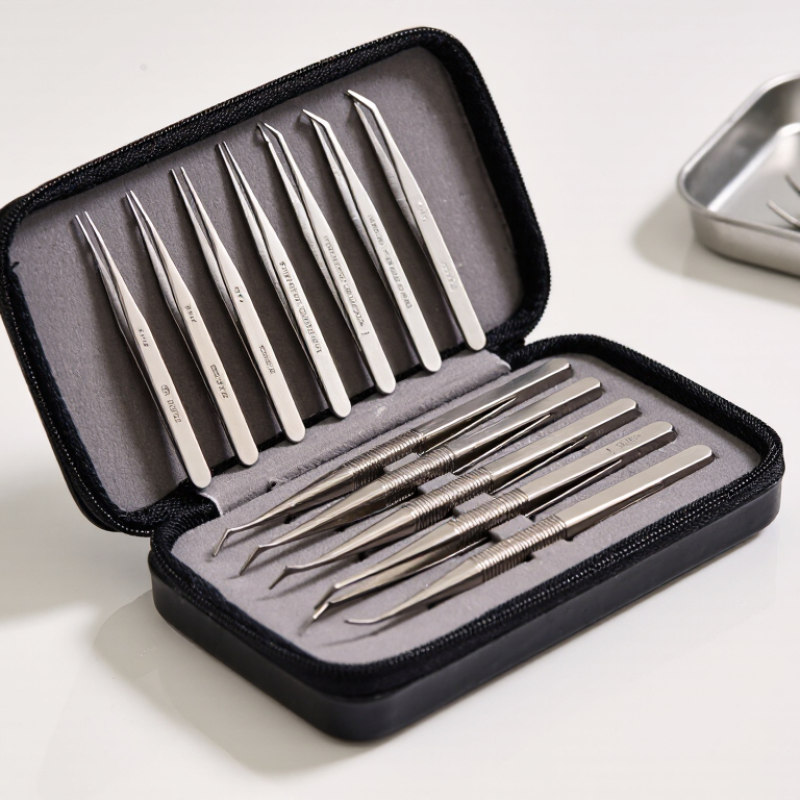
A practical eyelash tweezer set usually includes two or more tools with different tip shapes. A straight tweezer can help separate natural lashes, while a curved or angled tweezer can pick up individual extensions or small fans. Some sets include a fine-point option for detailed work. Small details matter. Check that the tips meet evenly when gently closed; a visible gap can make gripping delicate fibers harder. A storage case may protect the tools between uses, though it does not replace proper cleaning.
Set contents vary, and more tools do not automatically mean better control. Look for a comfortable grip and balanced weight. If the tweezer feels slippery or strains your fingers, it may be difficult to use steadily during a long appointment. I once assumed a sharper tip would always be more precise. Not quite. Tip alignment and a relaxed grip matter just as much. Clean and maintain each tool according to its care instructions, and handle pointed ends carefully near the eye.
Tips: Test the grip on a clean surface before use. Keep tools in their case, and replace any tweezer with damaged or misaligned tips.
What an Eyelash Tweezer Set Includes
A basic lash-extension setup uses two tweezer roles: one to isolate a natural lash and one to pick up and place an extension. Sets may include additional tweezer shapes; contents vary by set.
How Tweezer Shapes Support Lash Extension Techniques
Tweezer shape changes how steadily a lash artist can isolate, pick up, and place extensions. Straight tweezers are often useful for separating natural lashes, especially when working near the inner corner. Their narrow tips can reach small gaps, but they may feel awkward if the hand angle is cramped. Slow, controlled movements help reduce tugging.
Curved tweezers let artists approach the lash line from a more comfortable angle. A boot-shaped or angled tip can support pickup and placement, while a broader contact area may help hold a handmade volume fan. The exact fit depends on the artist’s grip, fan size, and working position. There is no perfect shape for every hand. Small differences matter.
It is easy to blame the tool when placement feels uneven, but lighting, posture, and isolation technique also play a part. A tweezer should close smoothly without excessive pressure; test it with a gentle pinch before a service. Clean tools matter. Check that the tips meet evenly, since a small gap can make delicate pickup frustrating. A short practice session with different shapes can reveal more than choosing by appearance alone.
Materials and Design Features That Affect Precision
Top Eyelash Tweezers Set for Lash Extensions
Precision begins with how the tweezer meets the lash, not its shine. Stainless steel offers a firm, familiar feel and resists corrosion when cleaned and dried properly. A satin finish can reduce glare under a bright task lamp. But finish alone does not guarantee control. Inspect the tips against a light: they should meet evenly, without a visible gap or sideways shift. Feel the difference. A smooth, moderate spring lets you close the tweezer without a hard pinch. Excessive tension can tire fingers during detailed work; overly soft arms may wobble while isolating a natural lash. Curved and straight tips suit different angles, so choose the shape that keeps your wrist relaxed.
Grand View Research valued the global eyelash-extension market at US$1.6 billion in 2023 and projected a 7.5% compound annual growth rate from 2024 to 2030. That market estimate reflects demand, not proof that any tweezer is more precise. A useful bench check is simple: pick up a fine fiber, then repeat several times. Does the tip hold it consistently? Does the joint feel stable? Not just shine. Some coated finishes feel pleasant at first but may become slick with product residue. Clean tools carefully, check alignment often, and replace a pair when the tips no longer meet cleanly. Even experienced artists can mistake a familiar tool for a reliable one.
Comparing Top Sets for Different Lash Workflows
Top Eyelash Tweezers Set for Lash Extensions
Comparing Top Sets for Different Lash Workflows
A useful tweezer set is defined by the work it supports, not its piece count. Grand View Research estimated the global eyelash extension market at about US$1.3 billion in 2023. That figure describes market scale, not tool performance. Still, it reflects a field with varied service needs. A busy studio may need separate tools for isolation, classic placement, and volume fans.
For classic work, choose a fine, straight isolation tweezer and a precise angled pickup tool. Their tips should meet evenly under light pressure. For volume fans, a boot-shaped or curved tweezer can offer a broader contact point. Check that it releases fibers cleanly; a sticky tip can collapse a fan. Short handles may suit close control, while longer handles can feel steadier for some hands. Try them before committing.
Material and grip matter during long appointments. Smooth stainless steel is easy to wipe, but textured handles may feel more secure with gloved fingers. Small details count. Inspect the tips under a bright task lamp, and test the spring tension with repeated opens. Industry market estimates cannot tell you which shape reduces hand fatigue. That depends on grip, posture, and technique. I would not assume one “complete” set fits every workflow; even a favorite pair can feel wrong after a long day.
How to Choose and Care for a Lash Tweezer Set
Top Eyelash Tweezers Set for Lash Extensions
A useful lash tweezer set should suit your technique, not simply look polished. Look for an isolation tweezer with a fine, straight tip and an application tweezer with a curve that feels natural in your hand. Check that the tips meet evenly under good light; tiny gaps can make picking up fine extensions frustrating. Stainless steel is durable, but balance and grip matter just as much. A tool can look perfect online and still feel awkward in your hand. Try the closing pressure before relying on it for detailed work.
Tips: Hold each tweezer as you would during a service. Choose a comfortable grip and tips that close without excessive force. Keep a spare pair nearby.
Clean tweezers between clients using a process suitable for the tool and your workplace’s hygiene procedures. Remove adhesive residue with a compatible remover, then clean and disinfect as directed by the product instructions. Dry the tips fully before storing them in a clean case. Avoid scraping the tips or dropping the tweezers on a hard counter; even a small bend can affect alignment. Inspect them regularly. If a pair starts catching fibers or slipping, set it aside rather than forcing your usual technique. Small details can be easy to miss.
Conclusion
An Eyelash Tweezers Set typically includes several tools with different tip shapes, allowing lash artists to isolate natural lashes, pick up extensions, and place them with control. Straight or fine-point tweezers can support precise isolation, while curved, angled, or volume-style tips may make it easier to grip and position individual extensions or small fans. The right shape depends on the technique, working angle, and personal handling preference.
Precision also depends on material, tip alignment, tension, weight, and grip design. When comparing sets, consider whether the tools suit classic, volume, or mixed workflows and feel comfortable during extended use. Choose tweezers that close evenly and hold lashes securely without excessive pressure. Clean and dry them after use, store them in a protective case, and handle the tips carefully to maintain alignment. A thoughtfully selected set can make lash work more consistent, comfortable, and efficient.