Choosing among China’s Barber Shear Kits suppliers takes more than comparing catalog photos. A polished case may hold shears that feel uneven in the hand. Buyers should examine steel specifications, blade alignment, tension adjustment, handle comfort, and finishing quality. Ask whether the kit includes thinning shears, a comb, cleaning cloth, and protective case. Request close-up product images and a sample before placing a large order. Small details matter.
A composite industry perspective, represented here by sourcing specialist Lin Wei, puts it this way: “A reliable shear kit earns trust through consistent performance, not presentation alone.” This is an editorial summary, not a quotation from a verified individual. The distinction matters when buyers assess supplier claims. A clear comparison should also consider minimum order quantities, lead times, customization options, packaging, and documented quality checks. Confirm which specifications apply to the exact model being quoted; supplier catalogs can group different versions together.
This guide reviews ten suppliers in China through practical buyer criteria, including product range, communication, and evidence of manufacturing consistency. It is not a substitute for checking samples or confirming current specifications. Even experienced buyers can miss a detail. That is worth remembering. Use the shortlist to ask sharper questions, compare like-for-like offers, and choose a supplier whose answers remain specific when the order details become less simple.
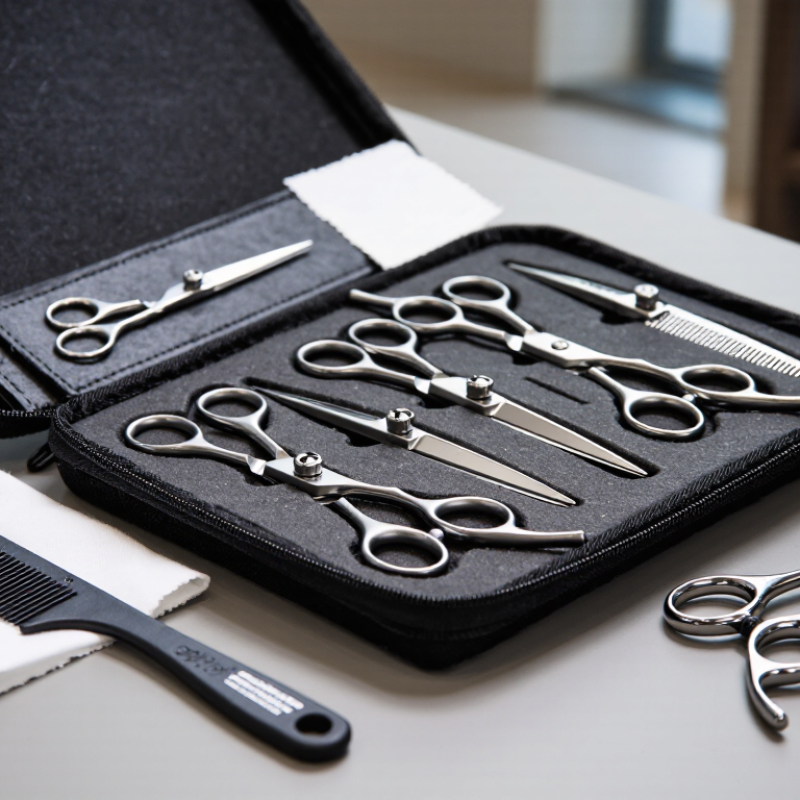
What Barber Shear Kits Include and How Buyers Use Them
A barber shear kit usually pairs straight cutting shears with thinning shears, a comb, a case, cleaning cloth, and tension key. Some sets also include a razor or maintenance oil, so buyers should check the item list rather than rely on photos. Cutting shears handle blunt lines and point cutting; thinning shears soften bulk and blend transitions. The comb guides sectioning, while the key helps adjust screw tension. Small parts matter.
For daily shop work, buyers can compare blade length, handle shape, steel finish, and balance. A shear should open smoothly without forcing the wrist, and the case should keep edges from knocking together during transport. Ask suppliers about sharpening compatibility and replacement screws. A polished case alone proves little. It is easy to overvalue appearance and overlook grip comfort, especially when testing only a few cuts.
Demand offers useful context, but not a guarantee of sales. The U.S. Bureau of Labor Statistics projects 7% employment growth for barbers, hairstylists, and cosmetologists from 2023 to 2033, with about 89,400 openings annually. Buyers can treat that as a broad workforce signal, not a shear-kit forecast. Test samples on different hair textures before ordering in bulk.
How to Evaluate Barber Shear Kit Suppliers in China
Evaluating a barber shear kit supplier in China takes more than comparing quoted prices. Ask for a current product list, clear photos, and specifications for every shear, thinning shear, comb, and case. Check blade length, handle style, steel grade, and stated hardness. Ask how these details are verified, not merely printed in a catalog. Small differences matter. A kit that looks complete may still contain tools with uneven tension or rough edges.
Request a sample and inspect it under bright light. Open and close each shear repeatedly; the movement should feel smooth, without catching near the pivot. Check blade alignment against a plain background and look for burrs around the finger rests. These checks help, but they do not replace batch inspection. Ask for the supplier’s inspection checklist and recent quality records. Vague answers deserve caution.
Confirm the minimum order quantity, customization options, packaging, lead time, and process for damaged or missing items. Put these details in writing, including replacement terms and exact kit contents. Compare prices only after specifications match. A low quote may reflect a thinner case or inconsistent finishing. No sample can guarantee an entire shipment will be identical, so documented quality checks matter. Communication is evidence too. A supplier who reports a delay early is easier to assess than one who promises everything.
Profiles of 10 Chinese Barber Shear Kit Suppliers
China’s barber shear kit suppliers differ in more than catalog size. Some focus on OEM production, while others assemble combs, razors, cases, and shears into ready-to-order kits. Grand View Research estimated the global hair-care market at USD 99.5 billion in 2023, but that figure covers a much wider category than barber tools. It signals demand context, not guaranteed shear-kit sales.
A coastal stainless-steel specialist may offer polished blades and several handle finishes; ask for edge-retention test details.
A small-batch workshop may accept low trial quantities, though its delivery schedule can shift.
An OEM-focused factory may customize pouches and kit contents.
A comb-and-accessory assembler can simplify sourcing, but check the shear maker separately.
A regional exporter may handle packing documents efficiently.
A sharpening-focused supplier can explain blade geometry in practical terms.
A private-label producer may offer custom packaging, while a wholesale trader may combine several factories’ products.
A salon-tool specialist may provide samples quickly.
A general hardware exporter may quote keenly, but barber-specific quality checks need confirming.
For all ten profiles, request close-up blade photos, sample kits, material declarations, and a written inspection checklist. UN Comtrade’s HS 821300 trade tables group scissors and similar shears; they do not isolate barber kits. This matters. A low unit price says little about alignment, tension, or finish. I would compare samples under the same inspection conditions. That step is easy to skip, and regrettable.
Comparing Product Range, Customization, and Minimum Order Quantities
When comparing the top 10 barber shear kit suppliers in China, look beyond the number of items in each catalog. A practical kit may include cutting shears, thinning shears, a comb, a cleaning cloth, and a fitted case. Some suppliers offer several blade lengths and handle styles, while others focus on standard sets. Ask for a current product list and clear photos of the kit’s contents. Small details matter.
Customization can cover handle color, engraving, packaging, and kit combinations. Request written specifications, including shear material, blade finish, and tension adjustment. Confirm whether custom packaging changes the production schedule or price. Minimum order quantities vary by product and customization level; a standard kit may have a lower MOQ than a private-label set. Ask for separate MOQs for samples, trial orders, and repeat orders. A sample helps assess balance and blade movement, but it may not represent every production unit. Keep that limitation in mind.
Tips: Compare complete quotes, not just unit prices. Check sample costs, lead times, packaging details, and replacement-part availability before choosing a supplier.
How to Verify Suppliers and Place an Informed Order
When comparing barber shear kit suppliers in China, verify the workshop behind the catalog. Request a current business license, a live video tour, and photos of production equipment. Ask who makes the shears and who handles final inspection. A tidy showroom is useful, but it does not prove consistent manufacturing.
Order samples before discussing a large shipment. Check that both blades meet evenly, the screw turns smoothly, and the shears cut a clean strip of wet tissue without folding it. Confirm steel type, blade length, handle style, included accessories, and packaging in writing. Ask for the sample and bulk-order specifications to match. A minor mismatch can become expensive when hundreds of kits arrive. I would also request a written schedule for production and shipping; supplier estimates can change, and that deserves a follow-up question.
Tips: Compare quotations line by line, not just by total price. Confirm minimum order quantity, payment milestones, defect handling, and inspection arrangements. Keep messages, approved samples, and specifications together. If a supplier avoids clear answers, pause. A rushed order can look efficient on paper, but it leaves too little room to correct details.
Supplier Verification Checklist: Evidence to Collect
This practical checklist counts suggested evidence items to review before ordering barber shear kits. It is a buyer-planning guide, not a ranking or measured comparison of suppliers. Confirm product specifications, quality requirements, payment terms, and inspection arrangements in writing before placing an order.
FAQS
Some focus on OEM production, while others bundle shears with combs, razors, and cases. Their roles differ.
Request a current business license, a live workshop tour, and photos of production equipment. Ask who performs final inspection.
Check blade alignment, screw movement, and cutting performance on wet tissue. Watch for folding or uneven cuts.
Specify steel type, blade length, handle style, accessories, and packaging. Make sure sample and bulk specifications match.
Not necessarily. Request a written production and shipping schedule, then follow up if dates change.
Review each cost, minimum order quantity, payment milestone, defect policy, and inspection arrangement. Total price alone hides details.
No. The relevant trade category groups scissors and similar shears, so it does not isolate barber kits.
Pause and request specific details before placing an order. I still find rushed decisions easy to regret.
Conclusion
This guide explains what Barber Shear Kits typically contain, from cutting and thinning shears to practical accessories, and how barbers, salons, and distributors may use them. It outlines key factors for evaluating suppliers in China, including product quality, material information, manufacturing capabilities, communication, and order terms. The article also introduces ten supplier profiles to help buyers compare potential sources without relying on a single selection criterion.
To support informed purchasing, the guide compares product range, customization options, and minimum order quantities, helping buyers match suppliers to their business needs and budget. It also describes practical verification steps, such as reviewing product specifications, requesting samples, confirming packaging and delivery details, and clarifying payment and quality expectations before placing an order. Together, these considerations can help buyers assess options carefully and make a more confident sourcing decision.