In 2026, the best Eyelash Extension Tweezers are not simply the prettiest tools on a salon tray. They should feel balanced in the hand, meet cleanly at the tips, and suit the artist’s preferred pickup and placement techniques. A curved tweezer may help with volume fans, while a precise isolation tweezer can make separating natural lashes easier. Hand size and grip pressure matter, too. The tool that feels effortless for one artist may cause strain for another.
Small details count. A tiny gap at the tip can make a fan slip; excess tension can tire fingers during a long appointment. Not glamorous, but important. Stainless steel, a comfortable finish, and easy-to-clean surfaces are practical features worth checking. Product descriptions can help, yet they do not replace testing the tweezer’s alignment and grip when possible. Even skilled artists may disagree about the ideal curve or weight. That is a useful reminder: there is no single perfect pair for every technique.
This guide compares popular styles and features to help lash professionals make a more informed choice. It looks at tip shape, tension, control, durability, and value, rather than relying on appearance alone. Individual results can vary with training, hand position, and the extensions being applied. A well-chosen tweezer supports consistent work, but it cannot replace careful technique or proper client care.
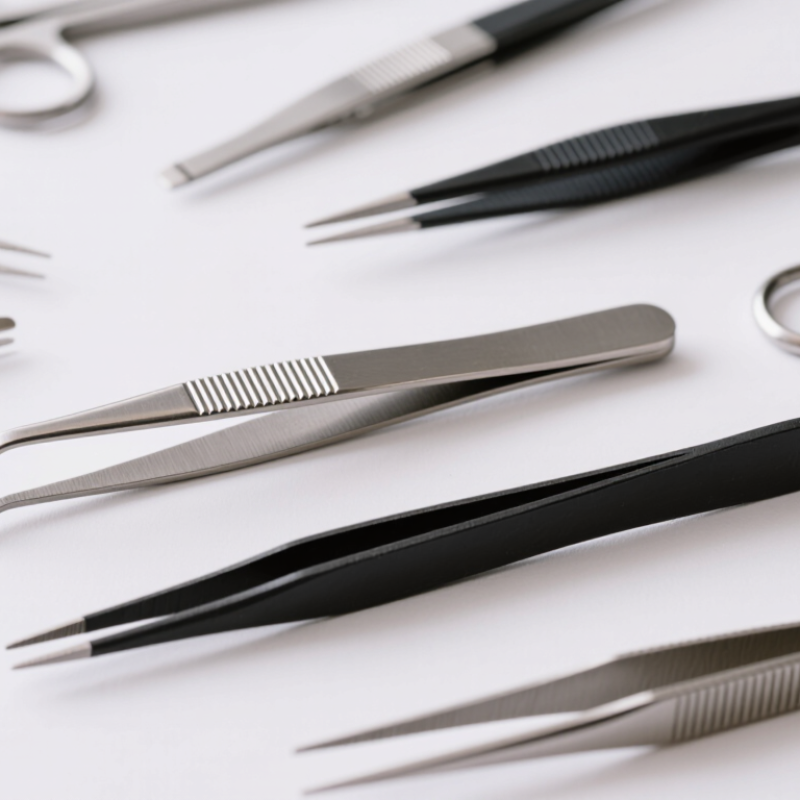
What Eyelash Extension Tweezers Are and How They Work
Eyelash extension tweezers are precision tools used to separate natural lashes and place individual extensions. They have narrow tips for working close to the lash line without gripping skin. A straight shape often helps isolate one natural lash, while a curved or angled shape can help pick up and position extensions. The best shape depends on hand position, technique, and comfort. Small differences matter.
During application, one tweezer holds nearby lashes apart while another lifts an extension and guides it onto an isolated natural lash. The tips should meet evenly; a slight gap can make pickup less reliable. Keep the tool steady, with a relaxed grip, and avoid pressing against the eyelid. Clean, dry tips also help maintain control. Practice on a training surface before working near the eyes.
Precision takes time. A tweezer that feels light in the hand may still cause fatigue during a long appointment, so test its balance and tension. Check for smooth movement and tips that align without force. Even skilled technicians have off days. It is easy to blame the tool, but posture, lighting, and hand pressure can affect the result too. A short pause can help reset control.
Which Tweezer Shapes Suit Different Extension Techniques
In 2026, tweezer shape should match the extension technique and the artist’s grip. Straight, fine-point tweezers work well for isolation: the narrow tips separate one natural lash without blocking the view. For classic extensions, a gently curved tweezer can help place one extension while keeping the hand relaxed. Fan-making needs a different feel. L-shaped or boot-style tips offer a broader contact surface for picking up and controlling a handmade fan. Fit matters. A sharp tip is not automatically more precise; if it pinches or strains the wrist, it can make placement less steady.
Check the working angle before choosing. A tight curl or narrow eye area may call for a slimmer curve, while a wider fan often feels easier to control with a broader pickup edge. The best shape is the one that lets the tips meet cleanly without crushing the fan. There is no universal curve, and hand angle can change the result. A 2012 clinical case series published in Cornea reviewed 107 patients with ocular complications associated with eyelash extensions. It did not compare tweezer designs or measure injury rates, so it cannot establish that one shape is safer. Still, it supports careful handling: use clean tools, keep tips visible, and avoid touching the skin or eye. Small adjustment, real difference.
Top Eyelash Extension Tweezer Shapes in 2026
Which tweezer shapes suit different extension techniques? Compare practical fit ratings on a 1–5 scale.
Straight tweezers are commonly suited to isolating natural lashes, while angled, boot, and L-shaped tips can make fan pickup and placement easier. Ratings are a practical, qualitative comparison—not laboratory measurements; individual preference and technique matter.
How to Compare Top Eyelash Extension Tweezers in 2026
Comparing top eyelash extension tweezers in 2026 starts with the work they need to do. Isolation tweezers should separate individual lashes without catching nearby hairs. Volume tweezers should close evenly and hold a fan without crushing it. Check the tips under bright light: even a tiny gap can make pickup less reliable. Small details matter.
Next, assess balance, grip, and finish. A lightweight tweezer may reduce hand strain during long appointments, but overly light tools can feel unstable. Hold each pair as you would during a service, then test the grip with clean, dry fingers. Knurled or textured handles can help, though deep grooves may collect residue and take longer to clean. Comfort is personal. A tool that suits one technician may not suit another.
Compare tip shape against your preferred technique, not just a product description. Curved, straight, and boot-style tips offer different visibility and access, so try them with practice lashes before choosing. Confirm the tips meet cleanly from base to point, and check that opening and closing require steady, moderate pressure. Price alone tells little about precision or durability. One easy-to-miss flaw: a tweezer can feel perfect in the hand yet struggle with fine lashes. Keep notes after testing; small differences are easy to forget.
How Materials and Design Affect Precision and Durability
Precision begins where the tips meet. For classic extensions, aligned, finely tapered points can isolate one natural lash without nudging its neighbors. Volume work often benefits from a broader, balanced pickup area. Steel matters, too: ISO 7153-1:2016 identifies stainless-steel materials used for surgical instruments, offering a useful materials reference, though it does not certify lash tweezers. Corrosion resistance and a smooth finish help tools tolerate repeated cleaning. Small differences matter. A rough joint or uneven tip can make a light grip feel tiring.
Design affects control as much as alloy. A moderate spring tension lets the fingers close the tips without a hard squeeze; a matte, lightly textured handle can reduce slipping when gloves are worn. Grand View Research estimated the global false-eyelashes market at about USD 1.6 billion in 2023. That figure signals a sizable category, not proof that any tweezer is precise or durable. Check tip alignment against a bright background, then test pickup with a few fibers before a full set. I would not assume the sharpest tip is best: it may snag, and personal grip varies. Cleaning routines also matter, so inspect joints and tip contact regularly rather than relying on material claims alone.
How to Choose and Care for Eyelash Extension Tweezers
Choosing eyelash extension tweezers starts with the work you do. A straight or gently curved tip can help isolate natural lashes, while an angled or boot-shaped tip may make fan pickup easier. Check that the tips meet evenly under light pressure. A tiny gap can make fine fibers slip. Fit matters most. The handle should feel balanced, not slippery, and should open without straining your fingers. Try a few shapes with clean practice fibers before settling on one. Preference is not perfectly objective; a tool that feels precise in one hand may tire another.
Care affects both performance and hygiene. After each client, remove visible residue, then clean and disinfect the tweezers according to the disinfectant’s label and your professional sanitation guidance. Let them dry fully. Keep them in a clean, closed case, separate from other metal tools. Keep them dry. Avoid scraping the tips together or dropping them onto a hard counter. Even a slight bend can disrupt alignment. Inspect the points before use; if they snag fibers or no longer close evenly, set the tweezers aside for repair or replacement. It is easy to blame technique first, but sometimes the tool is the problem.
Conclusion
Eyelash Extension Tweezers are precision tools designed to isolate natural lashes and place extensions with control. Their shape affects how they perform: straight tweezers can help with isolation, while curved, angled, or boot-shaped designs may suit different pickup and volume techniques. The best choice depends on the method being used, the user’s hand position, and how comfortably the tips meet.
When comparing tweezers in 2026, consider tip alignment, grip, weight, balance, and ease of handling, alongside the materials and construction. Stainless steel and other durable materials can support reliable performance, while a well-designed finish may improve comfort and control during detailed work. Choose a pair that fits your technique and feels steady in your hand, then keep it clean, store it safely, and check the tips regularly for damage or misalignment.