
Beauty & Surgical-Grade Instruments for Tomorrow · OEM & Private Label · Worldwide Export
Choosing manicure tools for international markets is rarely as simple as comparing item counts. A compact travel set may suit hotel guests, while a stainless steel professional kit supports busy salons. This guide examines ten types of Manicure Kits through practical buying criteria. It considers tool design, material quality, hygiene, packaging, replacement needs, and user skill levels. Global buyers need more than attractive product photos. They need accurate specifications, reliable samples, and suppliers who explain their quality controls.
Material selection matters. Stainless steel can resist corrosion when properly finished and maintained. However, “stainless” should not replace verification. Buyers should request material details, surface-finish information, and applicable test reports. Nail clippers, cuticle pushers, tweezers, files, and scissors may require different performance standards. A comfortable grip can reduce hand fatigue during repeated salon work. Sharp edges must remain controlled, not dangerously aggressive. That distinction is easy to overlook.
Packaging also affects real-world value. A rigid case protects tools during shipping and retail display. A washable interior may support better daily hygiene. Yet extra accessories can increase costs without improving the user experience. That assumption can fail. Buyers should compare the actual usage scenario, order quantity, target price, and after-sales support. Regional preferences also influence color, case style, tool combinations, and labeling requirements. No single kit fits every market. This overview offers a practical starting point, while reminding purchasers to verify samples, supplier credentials, and current import expectations before placing large orders. Small details matter.
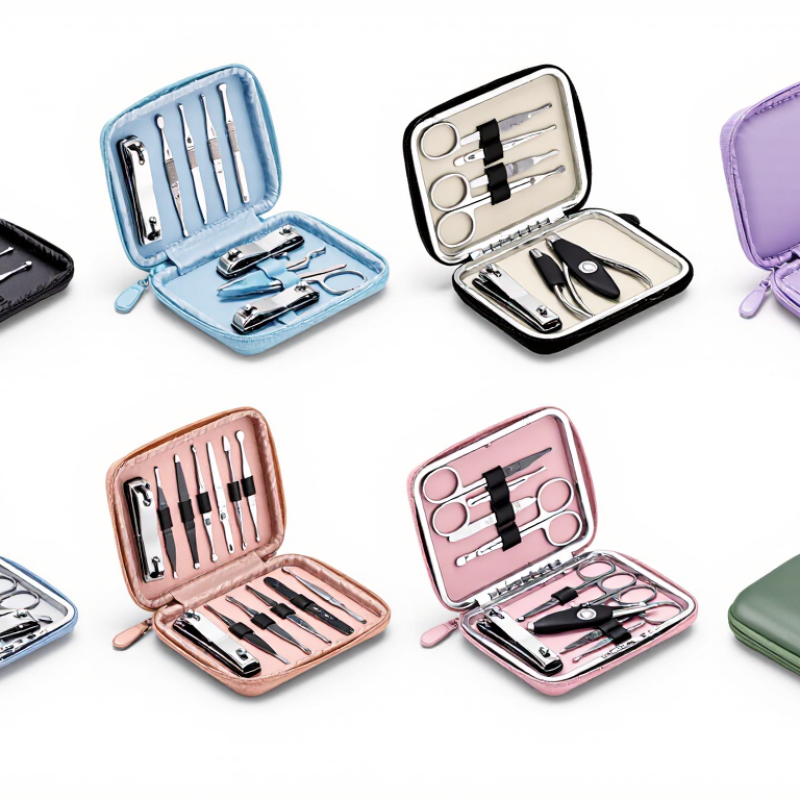
The best classification starts with tools, intended use, and buyer expectations. A basic home kit usually includes clippers, files, cuticle pushers, and buffers. A travel kit uses smaller tools and a protective case. A natural-nail care kit adds glass files, repair tools, and gentle cuticle products. It suits careful users who avoid extensions. A manicure-pedicure kit includes larger clippers, foot files, separators, and cleaning accessories. Families often prefer this flexible format.
For specific services, gel manicure kits may include a lamp, base products, color products, and removal tools. Acrylic extension kits focus on brushes, forms, powder, liquid, and shaping files. Electric drill kits serve trained users who need controlled filing speed. Professional salon kits provide broader tool ranges, replacement parts, and storage trays. Beginner kits reduce tool numbers and include simple instructions. Wholesale or private-label kits support distributors seeking mixed sizes, packaging options, and stable replenishment. Not every kit fits every market. That matters.
Tips: Match the kit to the buyer’s skill level and local climate. Check metal quality, hinge movement, edge sharpness, and case durability before purchasing. Electrical items should include clear voltage information and suitable safety documentation. Product claims need careful review. I have seen attractive sets fail because the case cracked after a few shipments. That small detail can damage buyer trust. Also, “complete” does not always mean practical; unnecessary tools may increase cost and confuse first-time users.
Manual kits suit travelers, beginners, and buyers needing simple maintenance. They usually include clippers, files, pushers, and small buffers. Electric kits add a motor, rechargeable battery, and interchangeable bits. According to Grand View Research, the global nail care products market was valued at approximately USD 23 billion in 2023. Growing demand makes kit quality more important, not merely appearance.
RPM needs careful interpretation. Many electric kits offer 20,000–35,000 RPM, but higher speed can reduce control. A lower setting may work better around thin nails and cuticles. Look for at least three speed levels, stable rotation, and low vibration.
Battery capacity also matters. A 500–1,000 mAh battery may support several home sessions, depending on load. USB-C charging is practical for international buyers. Bits should include sanding bands, ceramic or diamond heads, and clear size descriptions. I have found that extra bits often look impressive but remain unused. That is worth questioning.
Tips: Check warranty length, replacement-bit availability, and charging compatibility before purchase. A 12-month warranty is a basic benchmark; 24 months offers stronger risk protection.
Read safety instructions carefully. Avoid using maximum RPM immediately. Test the gentlest setting first. The International Trade Centre’s consumer-goods guidance emphasizes clear specifications and after-sales information for cross-border purchasing.
Manual kits have fewer failure points, while electric kits offer faster shaping. Neither choice is automatically better. Personal skill, nail condition, and service expectations should decide.
The nail-care market is projected to grow at a 5.2% CAGR from 2024 to 2030, according to Grand View Research. That growth supports broader demand for practical, salon-ready manicure kits. Global buyers can compare ten core formats:
basic manicure, gel polish, builder gel, hard gel, acrylic, dip powder, press-on, nail art, electric-file, and travel kits. Gel and acrylic kits deserve closer attention. Gel kits suit glossy finishes and faster home application, while acrylic kits support length and structured extensions. Product education matters. Confused buyers often return unsuitable kits.
Kit value depends on more than item count. A professional review should examine lamp wavelength, curing time, brush quality, monomer handling, powder consistency, and removal tools. Acrylic systems may require stronger ventilation and trained application. Gel systems can fail when layers are too thick or the nail surface is poorly prepared. The International Organization for Standardization provides relevant cosmetic and safety standards, while regional authorities may require specific ingredient labeling.
Forecasts are not promises. Exchange rates, salon training, and import rules can change purchasing results.
Tips:
Ask suppliers for full ingredient lists, safety documents, curing guidance, and batch information. Test a small order first. Measure return rates, breakage, curing complaints, and user feedback before scaling. A low-priced kit may look efficient, but missing tools can increase total cost. This is where buyers often miscalculate.
Fair comparisons should include shipping, training, packaging waste, and after-sales support.
Global manicure kits may include clippers, files, buffers, gels, removers, or curing lamps. Safety checks must match every component. Under EU Regulation 1223/2009, cosmetic products need an EU Responsible Person, safety assessment, Product Information File, and compliant labeling. Tools alone are not cosmetics. However, gels, oils, and removers require cosmetic compliance before sale. Claims such as “antibacterial” may create additional regulatory concerns. According to Grand View Research, the global nail care products market reached about USD 23.41 billion in 2023. Rapid growth increases the need for documented supplier controls.
CE marking CE marking is not a universal quality badge. It may apply to electrical lamps under relevant EU legislation, including electrical safety and electromagnetic compatibility requirements. A supplier should provide a Declaration of Conformity, technical documentation, test reports, and traceable model numbers. Non-electrical files and clippers usually do not need CE marking.
ISO 22716 ISO 22716 offers voluntary GMP guidance for cosmetic production. It supports batch records, hygiene procedures, training, sanitation, complaints, and recall readiness. A certificate alone can mislead. Audit the actual factory, not only its file.
Tips: Request ingredient lists, CPSR evidence, batch samples, and label artwork. Check whether the CE document matches the exact lamp model. Inspect sealed packaging, sharp edges, odor, and visible residue. Mordor Intelligence forecasts continued nail-care market expansion through 2030, but supplier quality may remain uneven. Buyers should record corrective actions. Small gaps often become expensive returns.
Global buyers often compare ten manicure kit types: basic care, gel, acrylic, dip powder, electric, travel, professional, beginner, repair, and spa sets. The kit format changes sourcing risk. A powered kit needs stronger quality checks. A travel kit needs compact, durable packaging.
MOQ is the first commercial filter. A low MOQ helps test demand, but unit prices may rise. Ask whether the MOQ applies per color, kit style, or total order. Request a written defect-rate formula. It should separate cosmetic flaws, missing tools, damaged packaging, and functional failures. A supplier reporting 0.5% defects may exclude customer returns. That needs checking. Review inspection photos, replacement records, and recent batch data.
Lead time should include production, inspection, packing, and port handover. A quoted 15-day schedule may exclude component shortages. Ask for a production calendar and a delay procedure. Trade data can reveal shipment frequency, declared product descriptions, destination markets, and seasonal patterns. Compare those records with supplier claims. Data is useful, not perfect. Customs descriptions can be broad or inconsistent. Start with a controlled sample order and record every issue, including loose handles, uneven files, and weak seals. Then compare landed cost, defect rate, and delivery reliability before accepting a larger MOQ. The cheapest offer often becomes expensive after rework and missed promotions.
Indicative sourcing benchmarks for private-label and wholesale purchasing decisions
| No. | Manicure Kit Type | Typical Components | Typical MOQ (Sets) |
Estimated Defect Rate | Production Lead Time (Days) |
Common Export Segment | Indicative Trade Demand | Buyer Suitability |
|---|---|---|---|---|---|---|---|---|
| 1 | Basic Stainless-Steel Manicure Set | Nail clipper, nail file, cuticle pusher, tweezers | 500–1,000 | 1.0%–2.5% | 25–40 | Mass retail and pharmacy | Consistent year-round demand | Entry-level, promotional, and travel retail |
| 2 | Professional 7–12 Piece Nail Tool Kit | Nippers, scissors, clippers, files, tweezers, cuticle tools | 300–800 | 1.5%–3.0% | 30–45 | Beauty distributors and salons | Medium-to-high specialist demand | Professional users seeking complete tool coverage |
| 3 | Travel Manicure Kit with Case | Compact tools, nail file, scissors, zippered case | 500–1,500 | 1.0%–2.0% | 25–40 | Travel, hotel, and gift channels | Seasonal and gift-driven demand | Compact private-label programs |
| 4 | Glass Nail File and Care Kit | Tempered glass file, buffer, cuticle stick, pouch | 500–1,000 | 1.5%–3.5% | 25–40 | Eco-conscious beauty retail | Growing niche demand | Sustainable and reusable product lines |
| 5 | Gel Polish Starter Manicure Kit | LED lamp, gel colors, base coat, top coat, files | 300–800 | 2.0%–4.0% | 35–55 | E-commerce and home beauty | High online search and retail demand | Home users and beginner nail artists |
| 6 | Acrylic Nail Extension Kit | Acrylic powder, liquid, brush, tips, forms, files | 300–600 | 2.5%–5.0% | 35–60 | Professional beauty supply | Specialist and salon-led demand | Training schools and experienced users |
| 7 | Dip Powder Nail Kit | Base, activator, powder, top coat, brush, remover tools | 300–800 | 2.0%–4.5% | 35–55 | Online beauty and specialty retail | Moderate demand with repeat consumables | Subscription and refill-based models |
| 8 | Press-On Nail Application Kit | Nail tips, adhesive tabs, glue, buffer, orange stick | 500–2,000 | 1.5%–3.5% | 25–45 | Fashion, online, and convenience retail | Fast-growing trend-led demand | Seasonal collections and influencer-led sales |
| 9 | Kids’ Safe Manicure Kit | Rounded-edge tools, emery board, non-toxic accessories | 500–1,500 | 1.5%–3.0% | 30–50 | Gift, toy, and family retail | Niche and holiday-oriented demand | Safety-focused buyers requiring compliance documentation |
| 10 | Luxury Leather-Case Manicure Set | Premium steel tools, leather or PU case, polishing cloth | 200–500 | 1.0%–2.5% | 40–65 | Corporate gifts and premium retail | Lower volume, higher unit-value demand | Premium packaging and customized gift programs |
It usually includes clippers, files, a cuticle pusher, and a buffer. A protective case helps keep tools clean. Too many extras may confuse beginners.
Travel kits use smaller tools and compact protective cases. They fit handbags, drawers, and short trips. Check the hinge and case before buying. Small cases can crack during shipping.
Choose glass files, gentle cuticle products, buffers, and repair tools. This format suits users avoiding extensions. Use controlled pressure. Over-filing can weaken nails.
Look for larger clippers, foot files, separators, and cleaning accessories. Families often prefer this flexible format. The tools should fit different users comfortably. One size rarely suits everyone.
A gel kit may include a curing lamp, base product, color product, and removal tools. Check curing guidance and lamp compatibility carefully. Thin layers usually cure more reliably. Thick layers may remain soft.
Acrylic kits suit trained users needing length and structured extensions. They may include brushes, forms, powder, liquid, and shaping files. Good ventilation is important during application. Training matters more than a large tool count.
Check speed control, voltage information, safety documents, and replacement parts. The user should understand controlled filing techniques. Inspect the cord and handpiece closely. More power is not always better.
Compare tool quality, packaging, mixed sizes, replenishment, and storage options. Request ingredient lists, batch details, and safety documents for cosmetic products. Test a small order first. Low prices can hide missing tools, damaged cases, or costly returns.
Manicure Kits can be classified into ten practical types according to their tools, applications, and buyer segments, including basic personal-care sets, travel kits, professional salon kits, gel manicure kits, acrylic kits, electric drill kits, beginner sets, premium gift sets, wholesale bundles, and specialized repair kits. Comparing manual and electric options requires attention to motor speed in RPM, battery capacity, included bits, charging design, noise, durability, and warranty coverage. Gel and acrylic kits should also be evaluated in line with the nail-care market’s projected 5.2% CAGR from 2024 to 2030, as demand increasingly favors convenient, durable, and salon-quality results.
For safe and responsible sourcing, buyers should review ingredient and product documentation under applicable EU cosmetic rules, confirm whether CE marking is relevant to the specific electrical device, and assess manufacturing controls aligned with ISO 22716 GMP principles where cosmetics are included. Supplier selection should be based on MOQ, defect rate, production lead time, quality consistency, after-sales support, and reliable trade data rather than price alone.