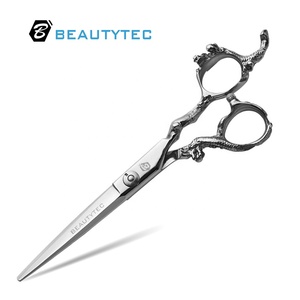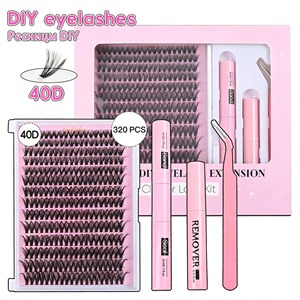
Explore our export-grade beauty instruments, hair cutting scissors, and specialized care tools engineered for salon chains, distributors, and private brands worldwide.
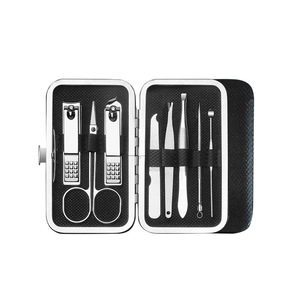
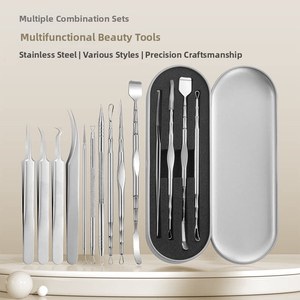
In the professional haircutting industry, thinning shears (also termed texturizing or blending scissors) serve as the fundamental tool for weight reduction, interior structure creation, and seamless weight removal. For global B2B buyers, salon chain procurement managers, and private label importers, evaluating a China Best Thinning Shears Professional Manufacturer & Exporters partner requires examining metallurgical science, tooth geometry micro-engineering, ergonomic balance, and batch-to-batch quality repeatability.
The performance, edge retention, and corrosion resistance of professional hair thinning shears are directly dictated by their chemical alloy composition. Premium manufacturers employ vacuum heat treatment and sub-zero cryogenic tempering cycles to achieve an optimal balance between blade hardness (measured on the Rockwell C scale, HRC) and structural ductility.
When evaluating supply chain options from top Chinese exporters, understanding the metal grades is critical to position your brand effectively across price-performance Tiers:
Thermal processing at -196°C eliminates residual austenite, converting it into hard martensite for enhanced wear resistance and edge stability.
Computerized 5-axis wire EDM (Electrical Discharge Machining) creates ultra-precise V-teeth and W-teeth with tolerances within ±0.005mm.
Master artisans individually hone the straight blade matching edge using Japanese waterstones to achieve razor-sharp 35°-42° cutting bevels.
Thinning shears differ fundamental from standard cutting scissors due to their dual-blade asymmetry: one smooth convex cutting blade paired with a comb-like teeth blade. The specific pitch, tooth count, notch profile, and cut ratio determine the exact hair removal percentage during each closure.
When issuing RFQs (Request for Quotations) to Chinese exporters, specifying the exact removal percentage prevents costly mass-production misunderstandings:
| Shear Category | Tooth Count | Removal Cut Ratio | Tooth Notch Design | Primary Stylist Application |
|---|---|---|---|---|
| Micro-Blender | 38 - 45 Teeth | 10% - 15% | Fine V-Groove / Triple Notch | Soft seamless blending, fine hair finishing |
| Classic Thinning | 28 - 30 Teeth | 20% - 25% | Standard Single V-Notch | All-round interior thinning & softening |
| Seamless Texturizer | 20 - 24 Teeth | 25% - 30% | Comb / Notchless Curve | Zero-line pull-out texturizing (Combless exit) |
| Chunking Shear | 12 - 16 Teeth | 40% - 50% | Wide U-Notch / Double Step | Aggressive weight reduction, thick hair sculpting |
Modern hair salons demand seamless performance where shears can slide out from hair strands without snagging. Leading Chinese manufacturers now produce three primary tooth apex geometries:
Professional barbers and hair stylists perform thousands of cutting motions daily. Modern OEM manufacturing focuses heavily on ergonomic handles that reduce thumb rotation and alleviate strain on the carpal tunnel, radial nerve, and shoulder muscles.
Partnering with an established exporter—incorporating precision artisan methodologies aligned with renowned manufacturing centers like Sialkot and Chinese metallurgical hubs—ensures your private label products achieve international reliability standards.
Before dispatching export shipments, top-tier manufacturers enforce rigorous inspection workflows:
The global professional haircutting tools market is undergoing rapid evolution driven by technological advancements and shifting buyer expectations. B2B buyers must align their product development roadmaps with the following emerging industry trends:
Traditional chrome plating is being rapidly replaced by Physical Vapor Deposition (PVD) and Diamond-Like Carbon (DLC) films. DLC coatings provide a friction coefficient below 0.1 and hardness levels exceeding HRC 70, making the shears virtually impervious to chemical corrosion from hair dyes, bleaches, and barbicide disinfectants.
Conventional center screws are giving way to micro-encapsulated Japanese ball-bearing leaf spring systems. These systems maintain constant smooth tension over tens of thousands of cycles without requiring manual adjustments, minimizing blade wear and stylist fatigue.
Distributors no longer wish to hold thousands of inventory units of a single SKU. Premier Chinese original equipment manufacturers (OEM) now support agile low-MOQ (Minimum Order Quantity) manufacturing, offering custom laser-engraved logos, specialized handle colors, and tailored packaging solutions starting from as low as 50 to 100 sets per model.
Global retail brands are phasing out single-use plastics in favor of FSC-certified recyclable cardboard boxes, bamboo presentation cases, and genuine leather zip pouches. Full supply chain traceability—from raw steel ingot certification to final assembly—is becoming a mandatory standard for European and North American buyers.
Clear, expert answers to key questions asked by international importers, salon suppliers, and OEM brand buyers.
Chinese manufacturers combine advanced metallurgical raw materials (imported Japanese 440C, VG-10, and high-purity domestic alloy steels) with state-of-the-art CNC 5-axis tooth milling machines and sub-zero cryogenic heat treatment technology. Coupled with skilled hand-honing craftsmanship, Chinese exporters offer world-class precision shears at highly competitive B2B factory-direct price points, supported by flexible OEM/ODM private label capabilities.
For entry-level or student barber kits, 9Cr13CoMoV steel (HRC 57-59) delivers dependable durability at economical costs. For professional salon-grade collections, Japanese 440C (HRC 58-60) is the global benchmark balance between hardness and ease of re-sharpening. For premium flagship series, selecting Takefu VG-10 or Cobalt alloy steel (HRC 60-62) ensures maximum edge retention and effortless cutting performance.
Sample creation and approval usually require 7 to 12 working days. Bulk production lead times generally range between 25 and 35 days depending on model complexity, coating finishes (such as PVD rainbow or matte black), and custom case packaging requirements. Expedited production runs can be arranged upon agreement.
Our Quality Assurance team performs a 100% manual inspection protocol on every individual shear. This includes inspecting blade tension, checking edge sharpness against fine synthetic hair and wet tissue fibers, validating tooth alignment to prevent catching, and confirming flawless surface coating and laser engraving accuracy.
Yes. We encourage all B2B buyers, distributors, and brand owners to evaluate physical sample units. Pre-production samples allow your master technicians to assess weight balance, tension smoothness, hand comfort, and cutting ratio precision prior to confirming mass production runs.
Request comprehensive product catalogs, custom OEM quote estimations, or order physical sample kits for technical evaluation today.
Inquire Now